FORM Resources presentation art
Core Ops

FORM Resources

The operational record system behind the work. Resources brings locations, vendors, assets, and operational records into one clearer organizational layer.

FORM operational tool
/contents
Route
Flagship only
Resources
Operational value
Execution gets weaker when the records behind the operation are fragmented or outdated. Resources helps keep the operation's reference layer usable.
AI-ready
AI posture
Users work faster when the reference system beneath the operation is cleaner and easier to navigate.
Operational records

FORM Resources is the record system behind the work: locations, vendors, assets, and the operational context the rest of FORM depends on.

This page should make the value obvious: the operation gets stronger when the records beneath it are easier to keep clean, connected, and usable.

FORM Resources main view
Core records

Keep locations, vendors, and supporting records organized in one layer.

Resources gives teams a better operational record system so the data supporting work orders, inventory, and reporting stays more usable.

Work Orders supported by resource records
Connected operations

Support the rest of the platform with stronger records.

When the reference layer is cleaner, tools like Work Orders, Inventory, and Budgets work better too.

FORM Resources record organization
Long-term organization

Reduce fragmentation in the operational record over time.

Resources helps organizations keep the underlying reference system from becoming outdated, scattered, or hard to trust.

How teams use it
Resources is the structured reference layer that helps the rest of the platform make more sense.
The workflow should keep records maintainable while also making those records more useful to the tools that depend on them every day.
Why it matters

Execution gets weaker when the records beneath the operation are fragmented or unreliable.

FORM Resources gives teams a cleaner way to manage the locations, vendors, assets, and supporting records the rest of the system depends on.

A stronger reference system behind the work.
Cleaner downstream workflows.
Better organizational memory over time.
Resource layer
FORM Resources workspace
Who it is for

Resources is a fit for organizations that know the operational record itself needs to become more usable.

This tool matters most when the operation has outgrown scattered lists, inconsistent records, and reference data no one fully trusts anymore.

Admins
01

Keep the operational record cleaner

The tool gives admins a better place to maintain the reference data the organization keeps leaning on every day.

Cleaner records
Less fragmentation
Better maintenance
Operations teams
02

Give the rest of the platform stronger context

Resources becomes more valuable when the rest of FORM depends on it for cleaner location, vendor, and asset context.

Better downstream context
Stronger tool support
Cleaner workflow foundation
Growing organizations
03

Stop letting the record system decay as complexity grows

A stronger reference layer helps keep growth from turning into a messy pile of half-trusted records.

Better scaling
More usable records
Stronger organizational memory
Product in action
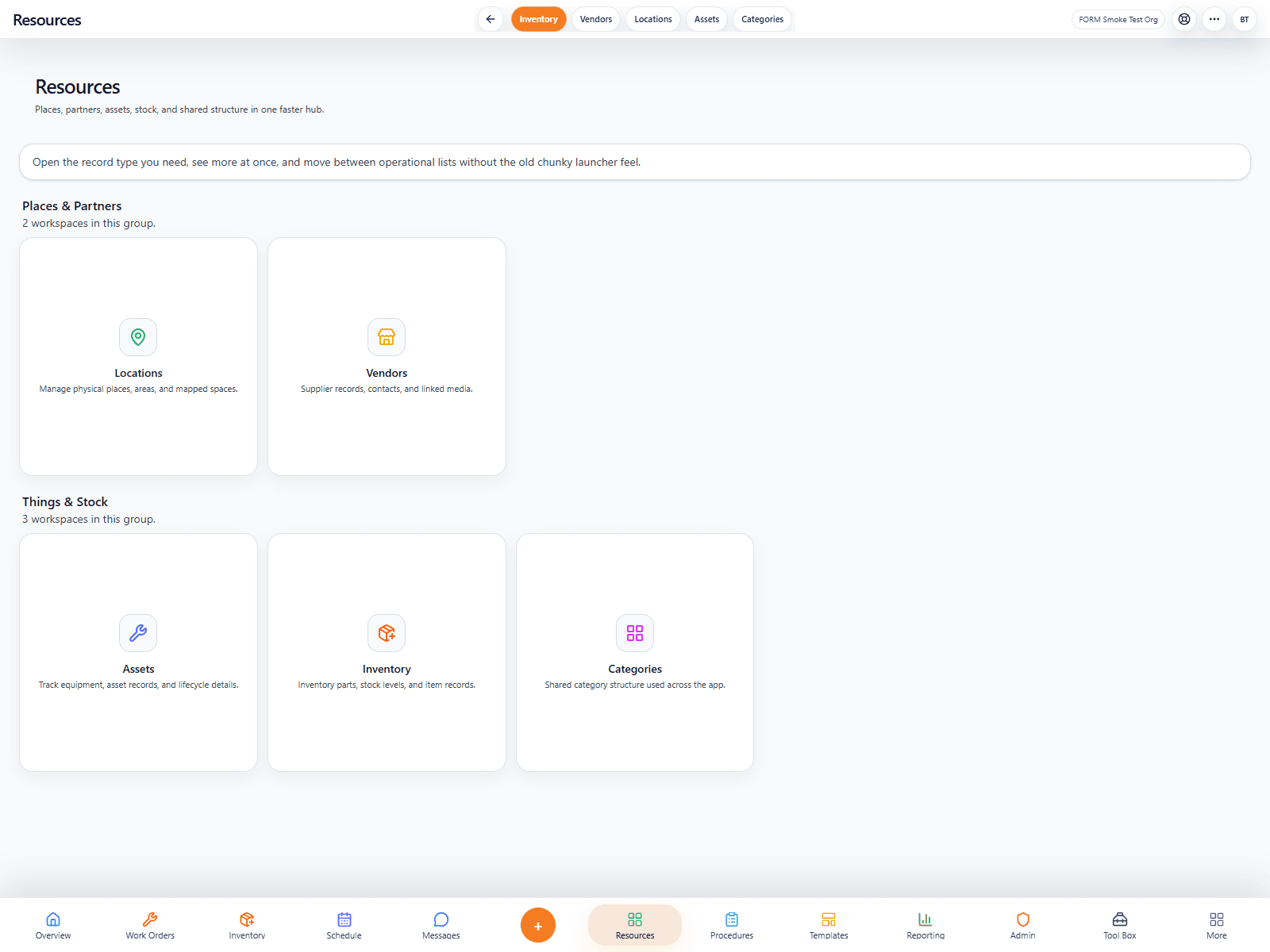
1 live screen that show how this product actually feels in the field.
1 live screen
We are using captured app screens here so the page feels like a real product launch page, not a placeholder brochure.
Featured view
Primary workspace
Screen 01
FORM Resources screenshot 1
AI in the workflow

The AI value is in making the rest of FORM more context-aware because the records are stronger.

As the ecosystem matures, richer operational records help the system deliver better downstream suggestions, better automation, and better answers overall.

Stronger context for automation.
Better downstream intelligence.
A more helpful system because the reference layer is healthier.
Operational record intelligence
FORM Resources intelligence context
More in this lane
Other core ops tools that strengthen the same story.
These neighboring tools help buyers understand that FORM is not just one page at a time — it is a coherent system with related workspaces supporting one another.