Enterprise solution

Unify providers, customers, operations, and payments without forcing every department into the same narrow app.

Larger organizations usually do not need another point solution. They need a connected environment that can handle customers, providers, internal execution, specialist workflows, and revenue without multiplying data silos and communication gaps.

Multi-team rollout | Customer continuity | Specialist tools | Expansion without fragmentation
Phased
Rollout style
Larger organizations often need a staged rollout that respects departments, locations, and operational maturity instead of trying to launch everything at once.
Connected
Architecture
The real win is reducing the fragmentation between customer-facing, provider-facing, operational, and billing systems.
Suite + standalone
Flexibility
Departments can use focused apps where needed without losing the broader ecosystem path.
What this audience needs

How FORM fits larger organizations.

This page highlights the workflows, operational needs, and benefits that matter most for this audience.

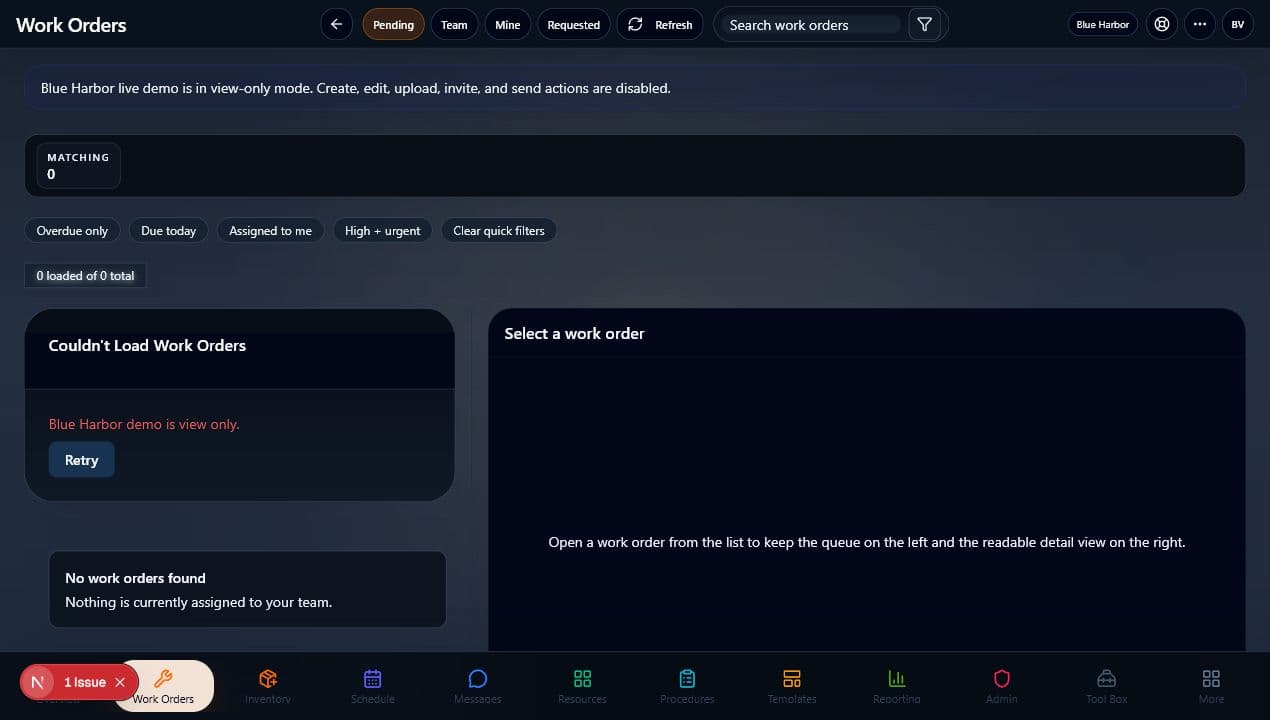
Blue Harbor demo overview showing FORM as an enterprise operating backbone
Operational backbone

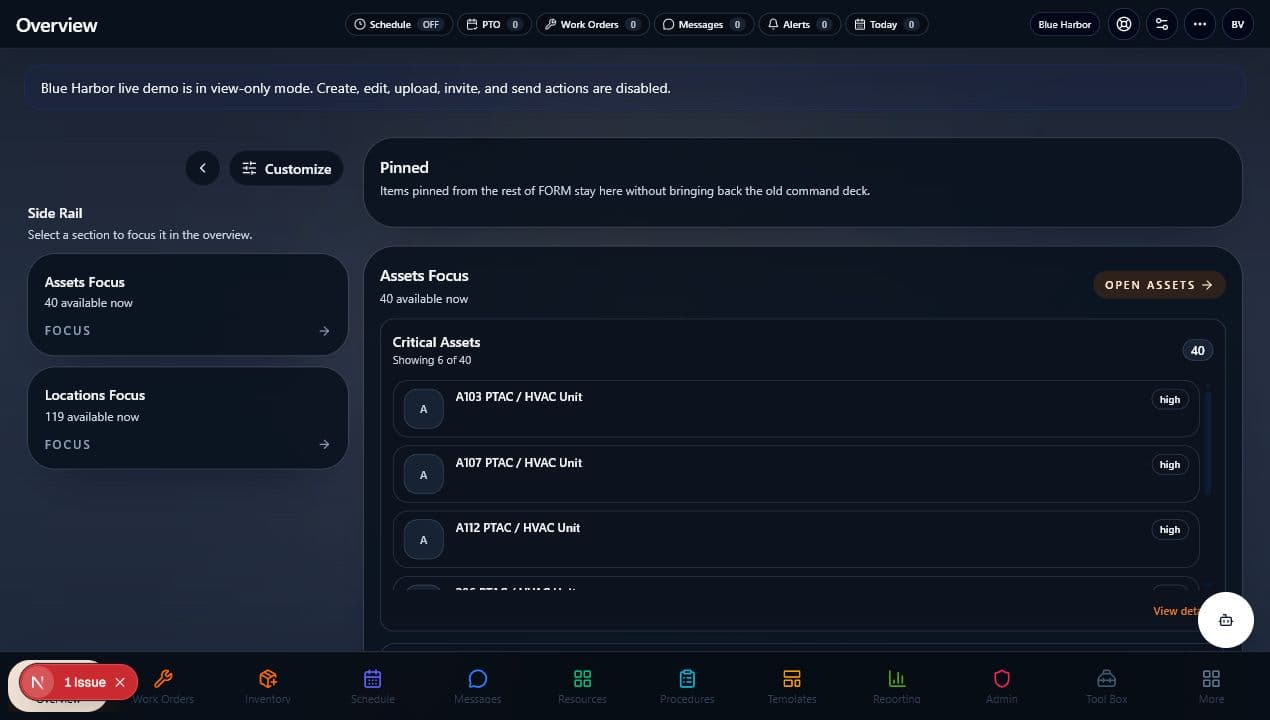
Use the full FORM platform as the command layer where the wider environment needs one source of truth.

Bigger organizations benefit when teams, work execution, customer visibility, providers, and billing sit closer to one operational model.
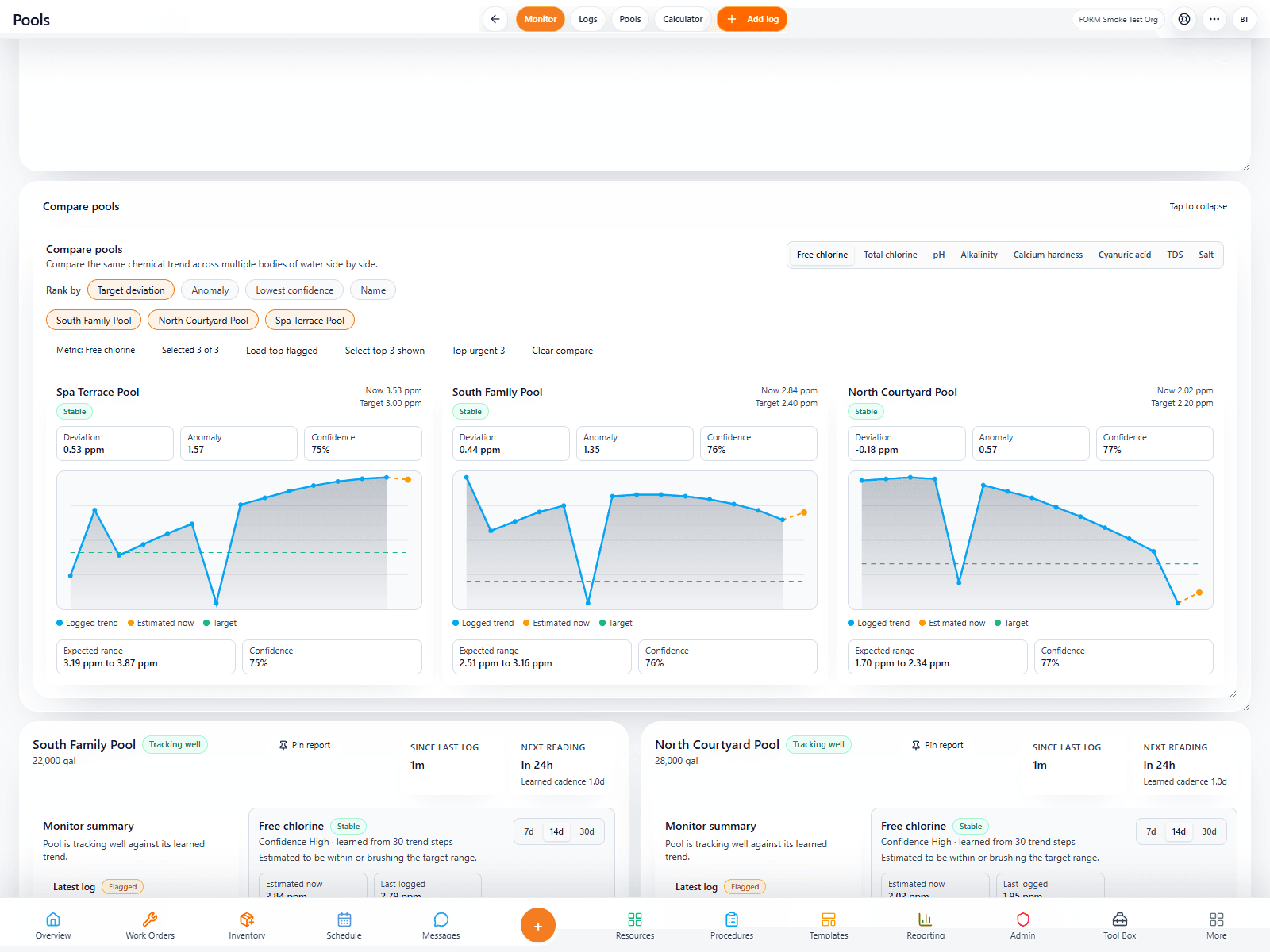
Real FORM pools workspace showing a focused-app department surface
Department fit

Deploy focused apps where a department needs a narrower surface.

Specialist teams can use focused apps like Pools, Budgets, Schedulers, or Payments without forcing the whole organization into that same narrow posture.

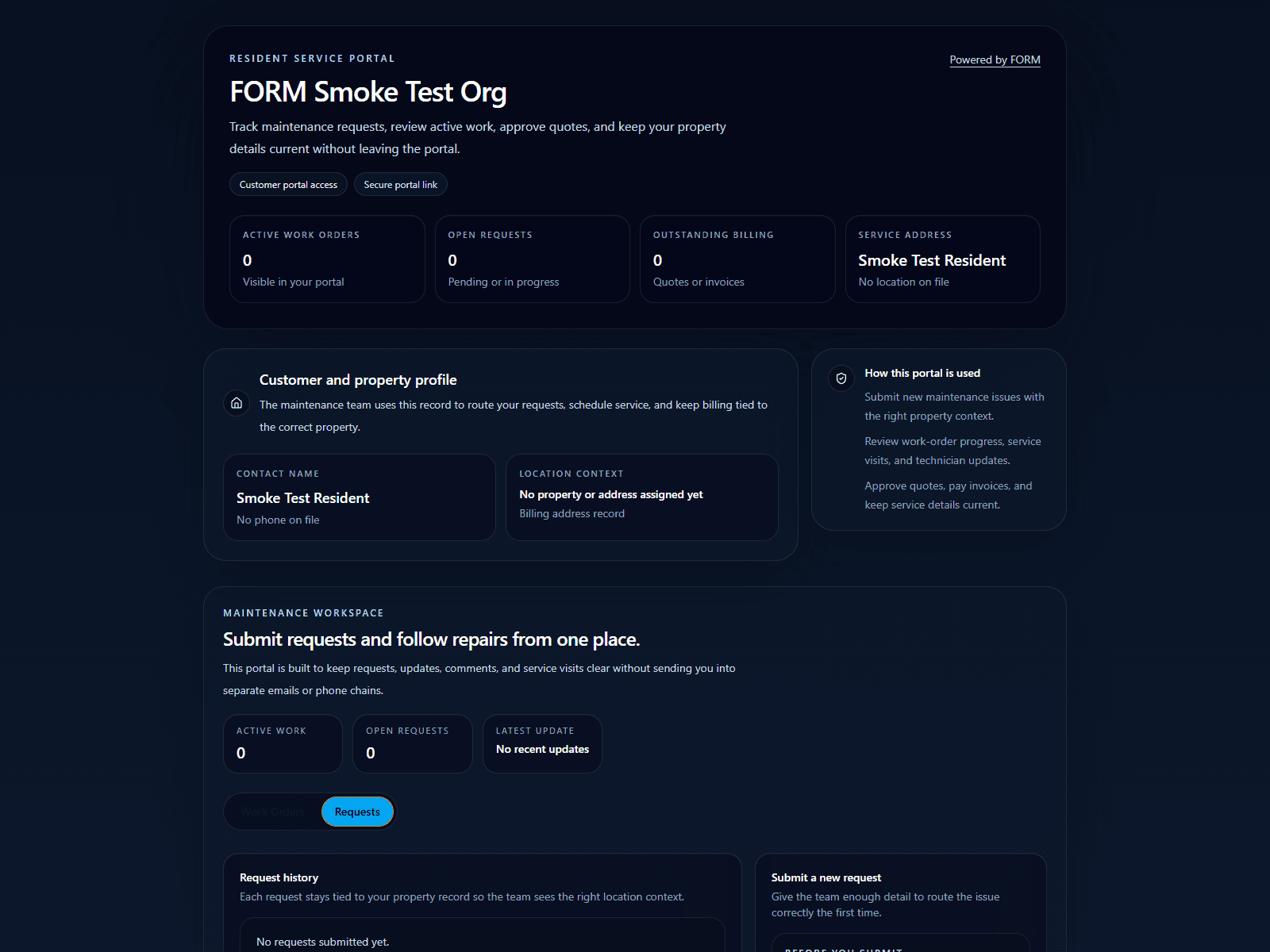
Real FORM customer portal keeping customer-facing visibility tied to operations
Customer continuity

Keep the customer-facing side from drifting away from the operational reality.

The shared portal helps customers see requests, documents, and billing in one place while internal teams still work from the operational side of FORM.

Why this fits

Big organizations need fewer handoffs, not more software layers.

FORM matters here because it reduces the gaps between departments, providers, customers, and billing while still respecting the fact that different teams may need different surfaces. That is a better scaling pattern than stacking disconnected tools and hoping people keep them aligned manually.

Cleaner coordination across teams and departments.
A better bridge between customer-facing and internal systems.
Focused app flexibility without losing the broader environment.
Enterprise fit
Blue Harbor demo work-orders view showing operational coordination in FORM
Best next moves

Start with the area that matters most.

These are practical ways this audience can begin using FORM.

Platform posture
01

Lead with the full environment when the fragmentation is organization-wide.

If multiple departments are already suffering from disconnected workflows, the full platform path makes more sense than trying to solve it with another narrow tool.

Customer, provider, operations, and billing together.
Better organization-wide visibility.
Less duplication across systems.
Department posture
02

Use focused apps when a narrower team needs relief first.

Sometimes a bigger organization still needs to solve one specialist pressure quickly before it broadens the rollout. FORM supports that path too.

Pools, Budgets, Schedulers, or Payments.
Faster relief for one department.
Broader ecosystem path still preserved.
Rollout help
03

Use contact when sequencing the rollout is the main challenge.

Bigger organizations often need help deciding which teams, customer surfaces, and billing flows should move first.

Phased rollout design.
Department-by-department fit.
Avoid expansion chaos.
Suggested starting points

Start where the pain is most expensive.

The right first move depends on whether growth, customer access, operations, or payments is the biggest issue today.

Full FORM platform

Best when the organization wants a connected environment across multiple teams and pressures.

Focused apps

Best when one specialist team needs a dedicated app first without blocking a wider rollout later.

Implementation planning

Best when sequencing departments, customer surfaces, and billing flows is the hardest part.

Proof points

What this audience is usually trying to fix.

These are common business problems FORM is built to reduce for this audience.

Reduce software sprawl across departments
Pressure

Different teams keep adopting narrow tools, making it harder for the organization to keep customers, providers, and internal execution aligned.

FORM outcome

FORM offers a connected environment that can still respect department-specific rollout needs without multiplying silos.

Phase the rollout without losing the architecture
Pressure

A larger organization cannot responsibly launch everything at once, but it also cannot afford to make random point-tool decisions that trap it later.

FORM outcome

The suite-plus-standalone model supports phased deployment while still preserving one broader ecosystem strategy.

Keep the customer side attached to the internal truth
Pressure

Customers interact with one system while internal teams work from another, so updates, documents, and billing confidence erode.

FORM outcome

Shared portal continuity keeps the customer-facing side closer to the operational and billing backbone.

ROI lens

Where this audience usually sees value.

These are the main areas where teams usually see operational and customer-facing improvement.

System reduction
Fewer duplicated operating layers

Larger organizations often gain leverage not by adding more apps, but by reducing the fragmentation between the ones already shaping work.

Rollout control
Departments can move in phases without breaking the overall architecture

A connected ecosystem matters most when the organization cannot afford random tool adoption that traps one team away from the rest.

Customer continuity
The customer-facing side stays closer to the organization’s real internal truth

When portal, provider, operations, and billing context stay aligned, larger organizations reduce the confusion that usually grows with scale.

Composite scenario

Composite scenario: a larger multi-team operator

A growing organization needs one environment that can respect department differences without forcing every team into a disconnected stack.

Before

Each department solves its own immediate pain separately, leading to duplicated customer records, weak handoffs, and uneven rollout quality.

After

FORM supports a phased rollout with both suite and standalone paths while preserving a stronger shared customer, provider, operational, and billing model.