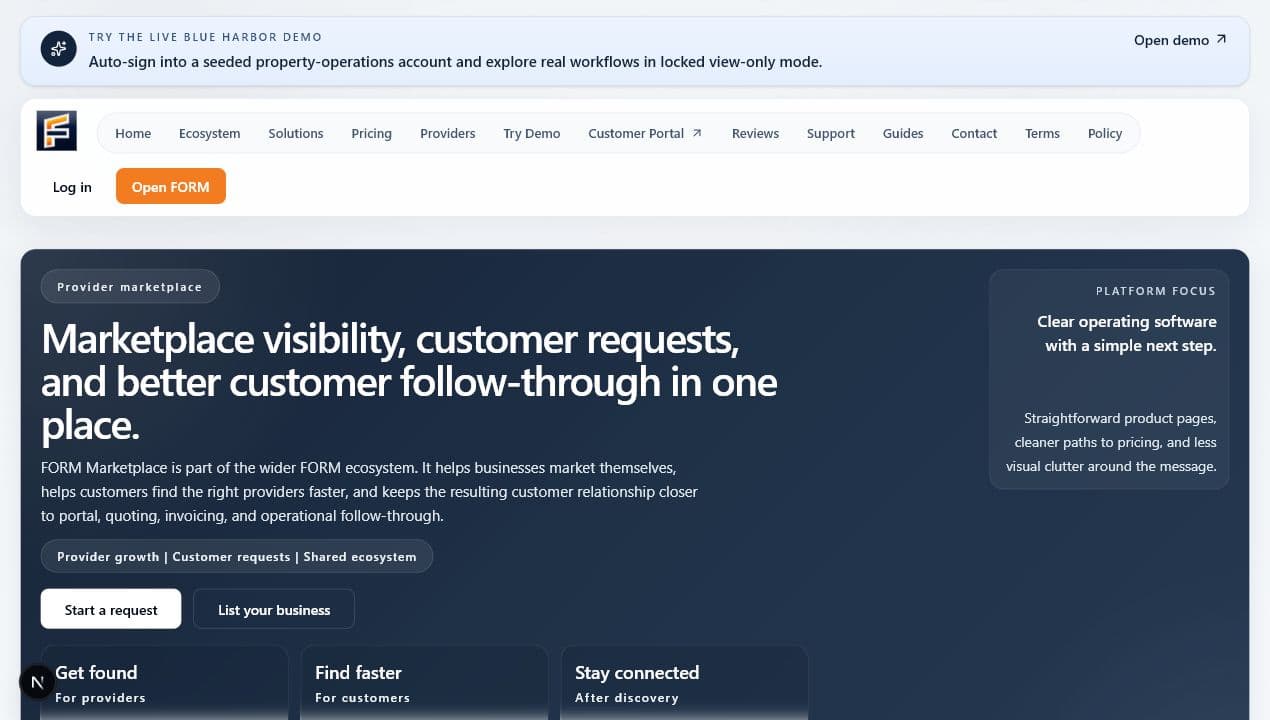
Customer acquisition
Market the business without creating another disconnected lead bucket.
Use the provider marketplace and request-service flow to get discovered, capture interest, and move new customers into a more organized relationship.
Small service businesses and contractors usually need three things quickly: a cleaner way to get found, a cleaner way to manage customers, and a cleaner way to get paid. FORM lets them start focused without locking them out of a bigger ecosystem later.
This page highlights the workflows, operational needs, and benefits that matter most for this audience.
Use the provider marketplace and request-service flow to get discovered, capture interest, and move new customers into a more organized relationship.
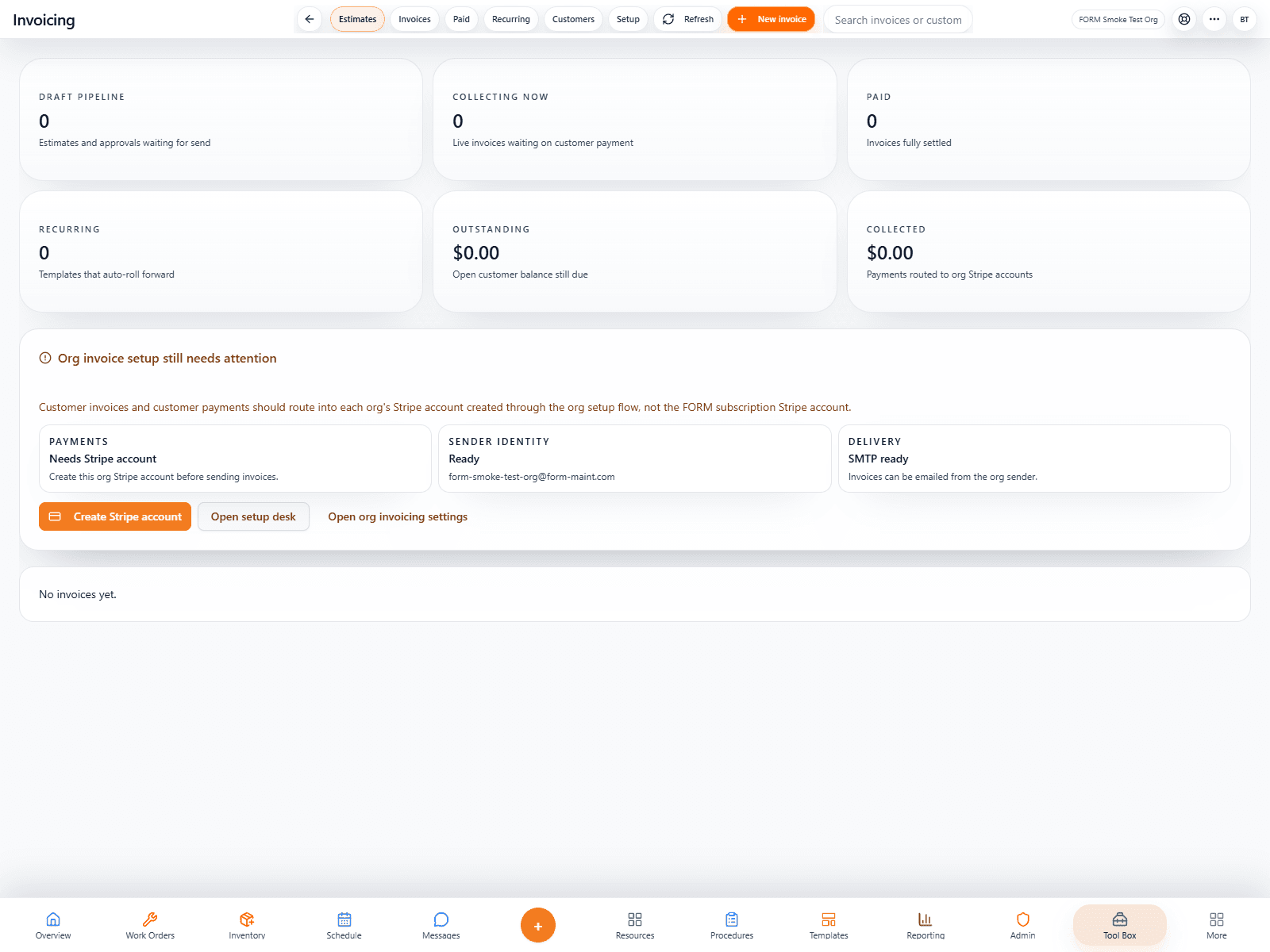
Payments, quotes, invoices, and Stripe-backed collection keep the money side closer to the real customer context.
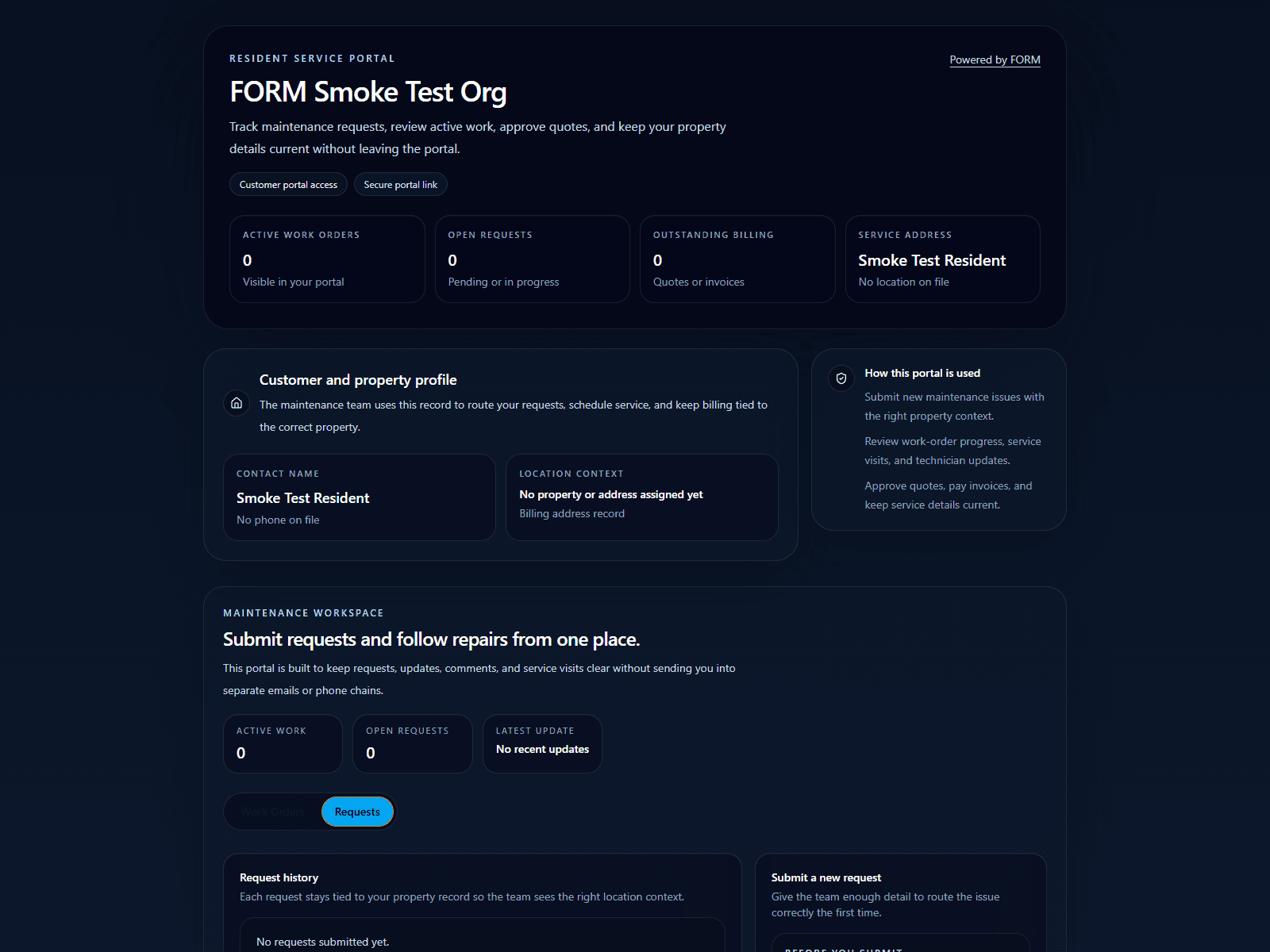
The shared portal helps customers stay connected through requests, invoices, documents, and messages instead of pushing everything back into ad hoc texts and emails.
FORM lets a smaller operator use one environment to market the business, manage customer relationships, run the work, and collect revenue. The point is not complexity. The point is reducing the handoffs that waste time and make customers harder to keep.
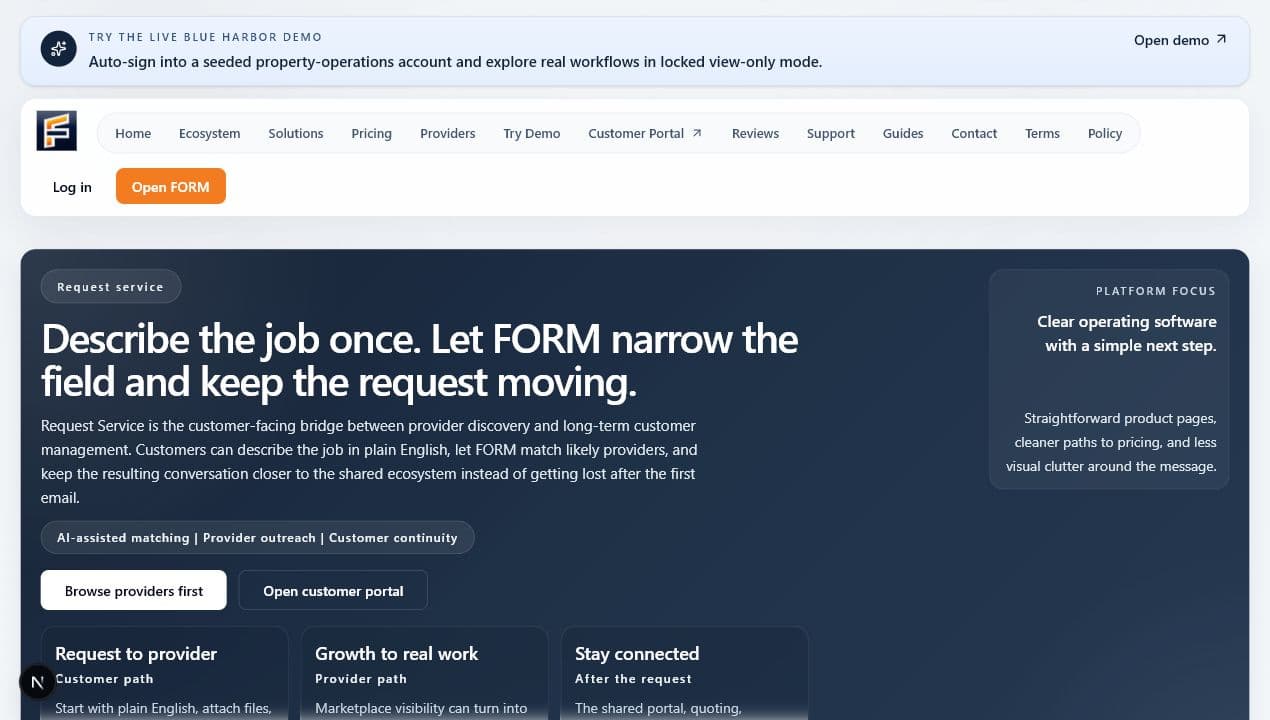
These are practical ways this audience can begin using FORM.
If the business mostly needs to get found, quote faster, invoice faster, and keep customers organized, it should not be forced into a bigger rollout than necessary.
As the business grows, FORM can expand into schedules, procedures, work execution, and specialist tools without throwing away the customer and billing foundation.
Some small operators need help deciding whether they should start with payments, marketplace growth, or a broader platform path.
The right first move depends on whether growth, customer access, operations, or payments is the biggest issue today.
Best when the immediate need is customers, quotes, invoices, POS, Stripe, and payment collection.
Best when the immediate need is new-customer visibility and better service-intake flow.
Best when the business grows into a wider operational environment and wants the ecosystem fully connected.
These are common business problems FORM is built to reduce for this audience.
A small operator gets inbound interest through scattered channels, then loses momentum while trying to quote, invoice, and follow up manually.
Marketplace visibility, request intake, customer records, and payment flow stay closer together so the business can move faster without feeling bigger than it is.
The first job gets won, but the customer relationship falls back into texts, ad hoc invoices, and disconnected notes afterward.
The shared portal and payment-side continuity give the business a cleaner way to keep current customers organized and easier to serve again.
A small business buys a narrow point tool first, then outgrows it and has to rebuild the customer and billing context elsewhere.
FORM allows a focused start now while preserving a path into the bigger ecosystem later.
These are the main areas where teams usually see operational and customer-facing improvement.
Small operators usually feel the most pain when new work stalls between first contact, quoting, scheduling, and collection.
The value is not only winning the work. It is keeping the customer relationship organized enough to make repeat service easier.
When discovery, customer records, and payment flow sit closer together, a small team can spend less time rebuilding the same context by hand.
A small operator is winning enough inbound work to feel the strain, but not enough to justify hiring a full back-office coordinator yet.
Leads arrive through scattered channels, quotes are assembled manually, invoices are disconnected from the service trail, and customer follow-up depends too heavily on memory.
FORM gives the business a tighter path from discovery to customer record to quote to invoice, with a cleaner portal and a more realistic path into broader operations later.