Multi-tenant solution

Keep residents, tenants, providers, staff, and billing closer to one operating environment.

Multi-tenant properties need more than a maintenance queue. They need cleaner request intake, better resident and tenant visibility, provider coordination, billing continuity, and a customer-facing portal that does not splinter away from the internal team workflow.

Shared portal | Requests | Provider coordination | Billing continuity
Shared portal
Customer side
Residents and tenants need a cleaner place for requests, updates, documents, and billing-related follow-through.
Work + providers
Ops side
Internal teams and external providers both need to stay attached to the same property and service context.
Less fragmentation
Pressure point
The main win is reducing the number of systems required to manage tenant communication, service execution, and customer-facing billing.
What this audience needs

How FORM fits multi-tenant properties.

This page highlights the workflows, operational needs, and benefits that matter most for this audience.

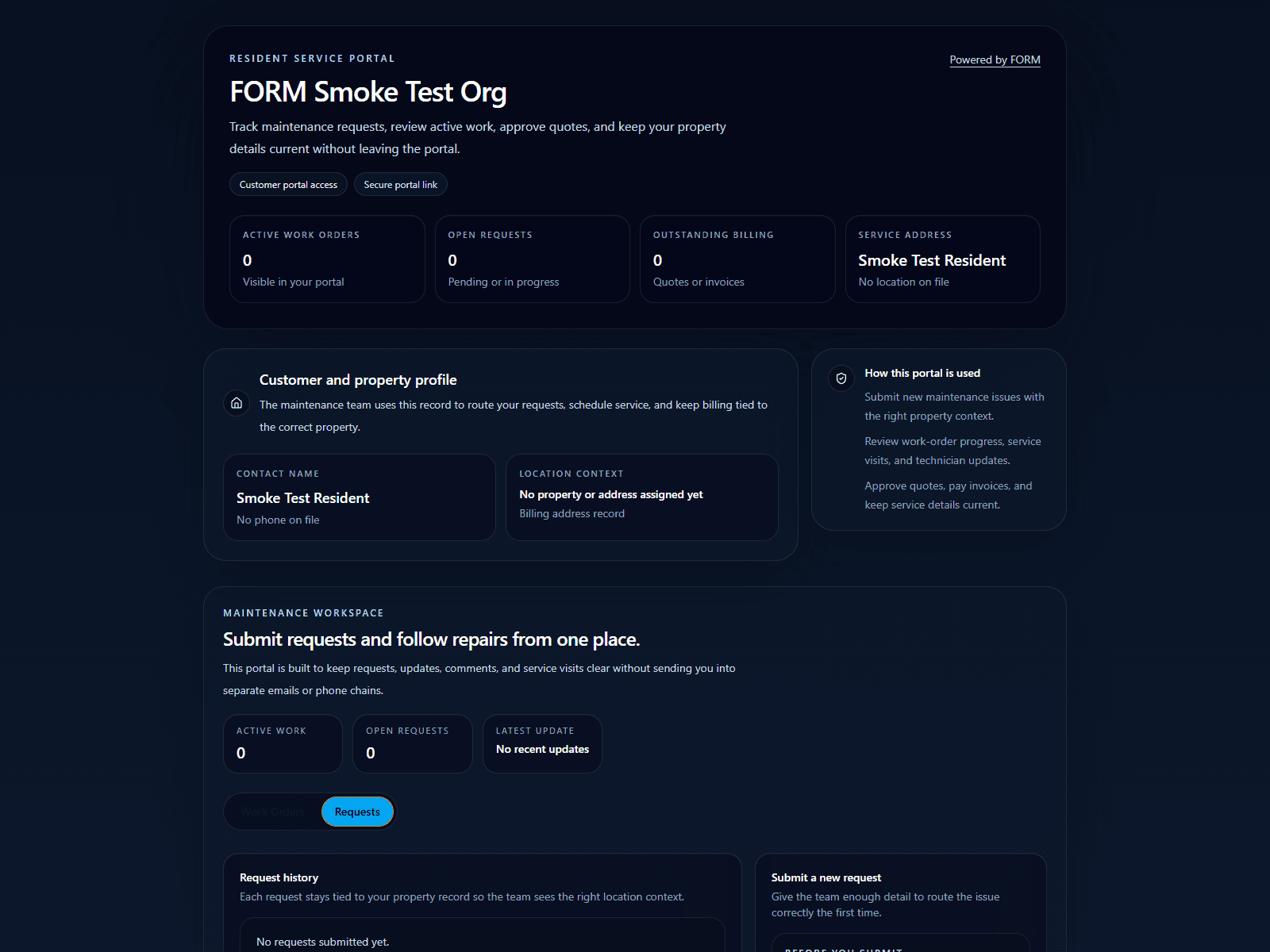
Real resident-facing FORM customer portal
Resident experience

Give residents and tenants one clearer place to stay informed.

The shared portal helps residents and tenants submit requests, see updates, follow invoices, and stay closer to the service relationship without juggling a patchwork of tools.
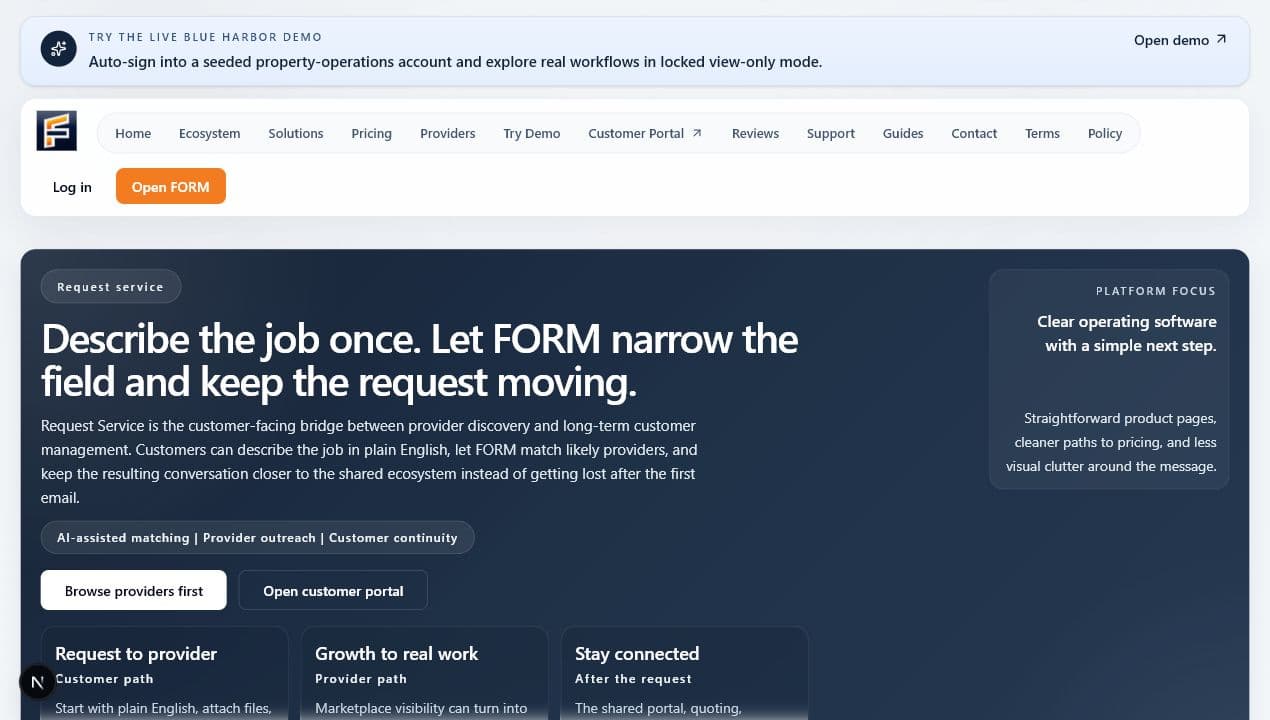
Live FORM request-service page showing customer intake and provider routing
Provider coordination

Keep vendors and specialist providers attached to the same operating model.

Marketplace and request-service flows can support provider discovery while internal teams still keep the property context, work follow-through, and history aligned.

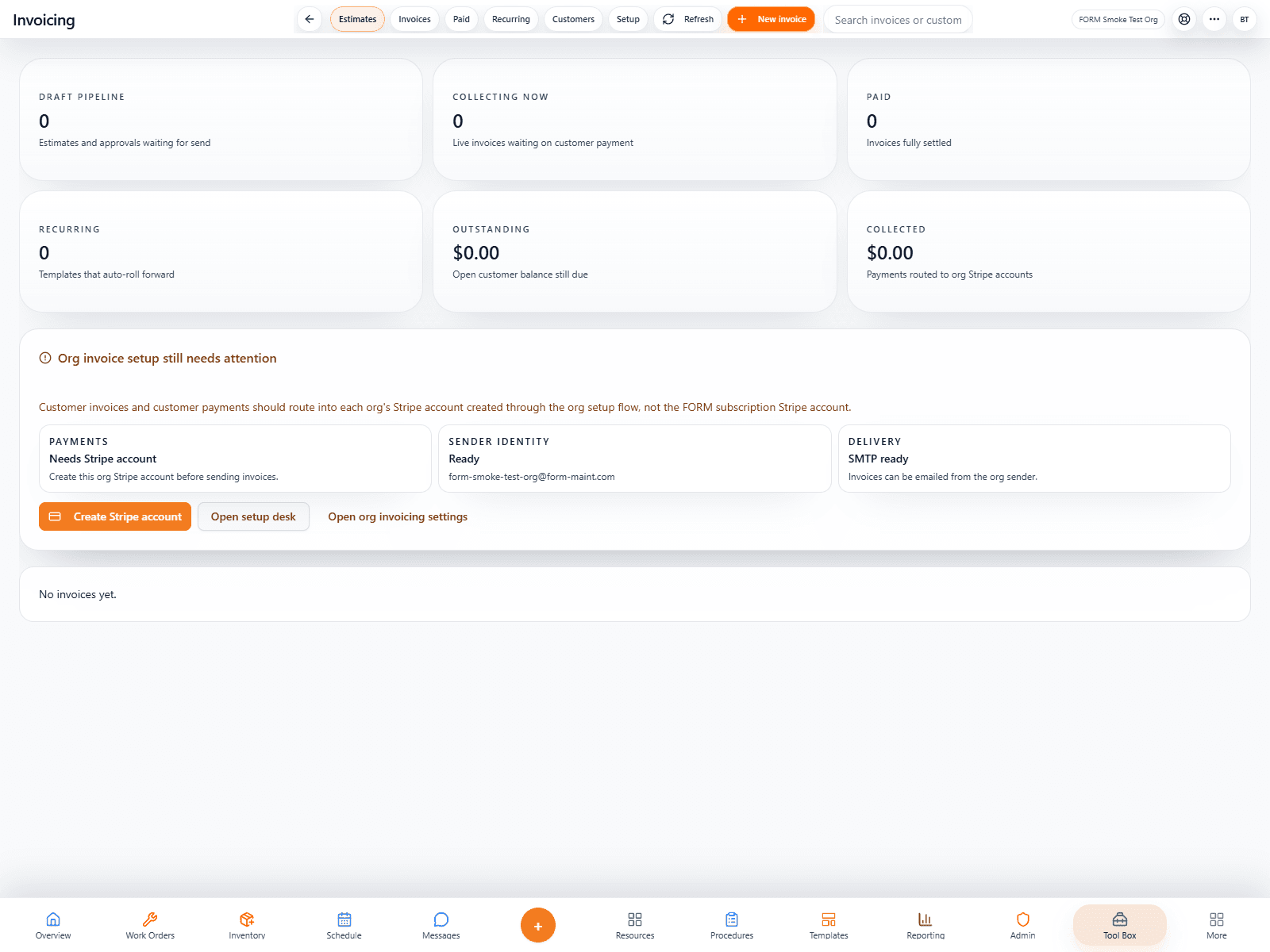
Real FORM invoicing workspace for customer-facing billing continuity
Billing continuity

Tie service and customer-facing billing closer together.

Quotes, invoices, and payment visibility are stronger when they stay connected to the same resident or tenant relationship instead of becoming a separate thread.

Why this fits

Multi-tenant operations break down when the resident side and the staff side stop talking to each other cleanly.

FORM is useful here because it does not isolate the resident or tenant experience from the staff workflow. Requests, providers, service execution, billing, and customer communication can all stay closer to the same property context.

Cleaner resident and tenant communication.
Less provider and staff handoff confusion.
Customer-facing and operational records closer together.
Property operations fit
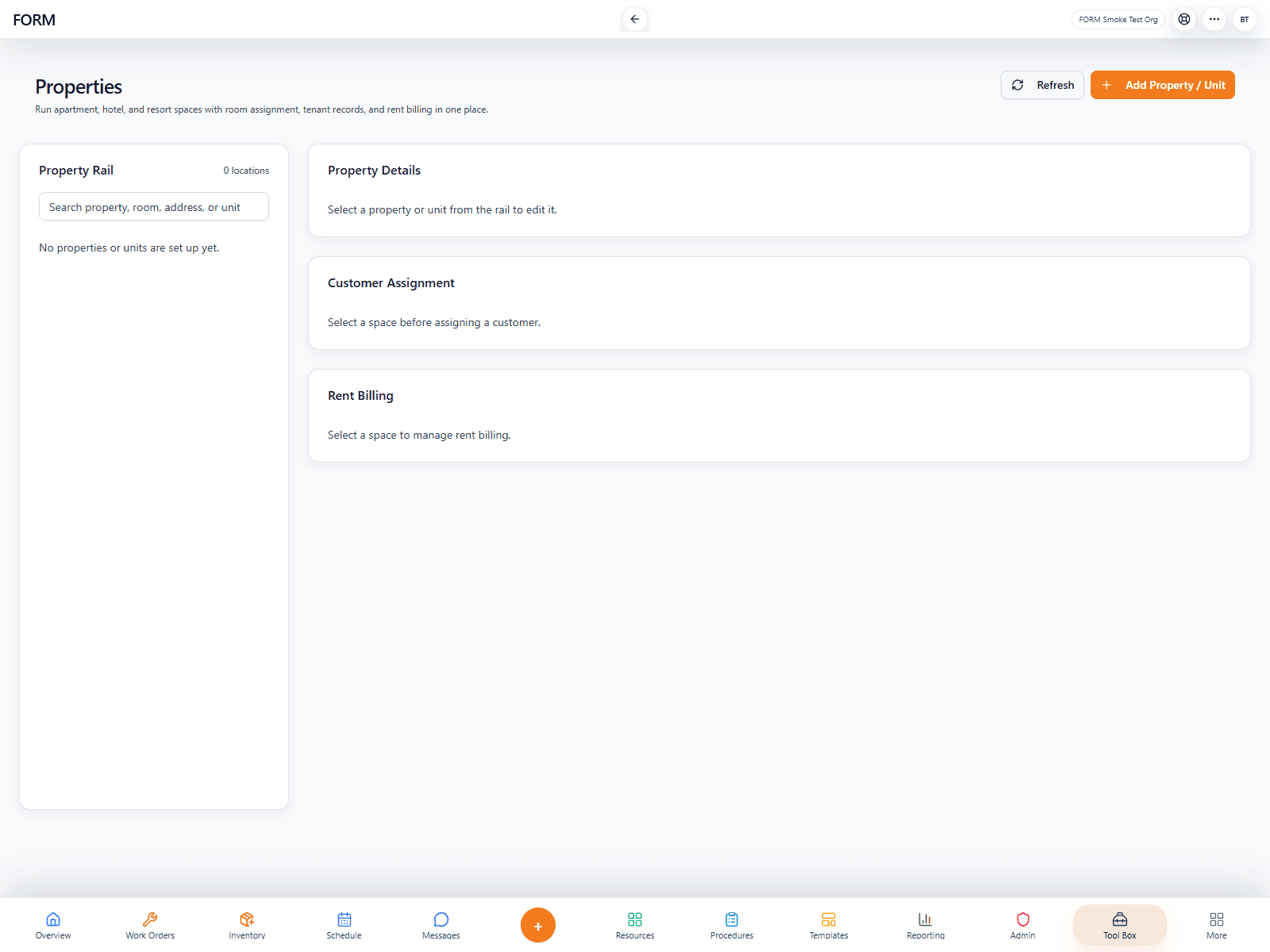
Real FORM properties workspace for unit, tenant, and billing context
Best next moves

Start with the area that matters most.

These are practical ways this audience can begin using FORM.

Customer flow
01

Lead with resident and tenant visibility when that is the pain.

If the main issue is poor communication and customer uncertainty, the shared portal and request flow deserve priority.

Requests and updates in one place.
Better customer confidence.
Less dependence on manual follow-up.
Operational flow
02

Connect the property workflow behind the portal.

The portal is only credible if the internal work-order, provider, and scheduling side stays aligned after the request is submitted.

Work-order follow-through.
Scheduling and provider coordination.
Operational context tied to each property.
Launch help
03

Use guides and contact when you need the rollout staged carefully.

Property teams often need help sequencing portal launch, provider use, customer records, and billing so they do not create more confusion while trying to fix it.

Phase the rollout realistically.
Clarify which customer surfaces launch first.
Keep the property model clean.
Suggested starting points

Start where the pain is most expensive.

The right first move depends on whether growth, customer access, operations, or payments is the biggest issue today.

Shared customer portal

Best when the first priority is resident or tenant visibility and request continuity.

Full FORM platform

Best when the property needs requests, provider coordination, operations, and customer-facing billing together.

Implementation guidance

Best when the team needs help sequencing the property model, portal rollout, and billing continuity.

Proof points

What this audience is usually trying to fix.

These are common business problems FORM is built to reduce for this audience.

Reduce resident or tenant uncertainty
Pressure

Residents and tenants submit requests, then lose visibility because the customer-facing and staff-facing sides of the workflow are not aligned.

FORM outcome

The shared portal, work follow-through, and billing continuity give customers a cleaner experience while staff still work from the same property context.

Keep providers attached to the same property story
Pressure

External vendors and internal teams coordinate through separate systems, so property history and responsibility get fuzzy fast.

FORM outcome

Provider coordination can stay closer to the same request, property, and billing context instead of fragmenting into separate silos.

Improve billing trust after service work
Pressure

Service charges and follow-up invoices arrive disconnected from the visible service history that led to them.

FORM outcome

Quotes, invoices, and customer updates stay closer to the same tenant or resident relationship and property record.

ROI lens

Where this audience usually sees value.

These are the main areas where teams usually see operational and customer-facing improvement.

Customer confidence
Residents and tenants get clearer visibility

A better experience reduces frustration around whether requests were seen, what is happening next, and how service and billing relate.

Operational coordination
Internal teams and providers work from closer context

The property operation improves when customer requests, provider involvement, and work follow-through stop splitting across too many systems.

Billing trust
Customer-facing charges make more sense when tied to visible service history

Even when billing is not the first pain point, it becomes easier to defend and manage when it stays attached to the same property and service trail.

Composite scenario

Composite scenario: a multi-building residential property group

A property team wants better resident visibility and cleaner provider coordination without making the staff workflow even more fragmented.

Before

Residents submit issues into one channel, vendors coordinate in another, and the billing or follow-up explanation lives somewhere else again.

After

FORM keeps requests, customer updates, provider follow-through, and customer-facing billing closer to the same property context, so the operation feels more coherent to both residents and staff.